Raising a Moral Child

APRIL 11, 2014

What does it take to be a good parent? We know some of the tricks for teaching kids to become high achievers. For example, research suggests that when parents praise effort rather than ability, children develop a stronger work ethic and become more motivated.

Yet although some parents live vicariously through their children’s accomplishments, success is not the No. 1 priority for most parents. We’re much more concerned about our children becoming kind, compassionate and helpful. Surveys reveal that in the United States, parents from European, Asian, Hispanic and African ethnic groups all place far greater importance on caring than achievement. These patterns hold around the world: When people in 50 countries were asked to report their guiding principles in life, the value that mattered most was not achievement, but caring.

Despite the significance that it holds in our lives, teaching children to care about others is no simple task. In an Israeli study of nearly 600 families, parents who valued kindness and compassion frequently failed to raise children who shared those values.

Are some children simply good-natured – or not? For the past decade, I’ve been studying the surprising success of people who frequently help others without any strings attached. As the father of two daughters and a son, I’ve become increasingly curious about how these generous tendencies develop.

Genetic twin studies suggest that anywhere from a quarter to more than half of our propensity to be giving and caring is inherited. That leaves a lot of room for nurture, and the evidence on how parents raise kind and compassionate children flies in the face of what many of even the most well-intentioned parents do in praising good behavior, responding to bad behavior, and communicating their values.

By age 2, children experience some moral emotions – feelings triggered by right and wrong. To reinforce caring as the right behavior, research indicates, praise is more effective than rewards. Rewards run the risk of leading children to be kind only when a carrot is offered, whereas praise communicates that sharing is intrinsically worthwhile for its own sake. But what kind of praise should we give when our children show early signs of generosity?

Many parents believe it’s important to compliment the behavior, not the child – that way, the child learns to repeat the behavior. Indeed, I know one couple who are careful to say, “That was such a helpful thing to do,” instead of, “You’re a helpful person.”

But is that the right approach? In a clever experiment, the researchers Joan E. Grusec and Erica Redler set out to investigate what happens when we commend generous behavior versus generous character. After 7- and 8-year-olds won marbles and donated some to poor children, the experimenter remarked, “Gee, you shared quite a bit.”

The researchers randomly assigned the children to receive different types of praise. For some of the children, they praised the action: “It was good that you gave some of your marbles to those poor children. Yes, that was a nice and helpful thing to do.” For others, they praised the character behind the action: “I guess you’re the kind of person who likes to help others whenever you can. Yes, you are a very nice and helpful person.”

A couple of weeks later, when faced with more opportunities to give and share, the children were much more generous after their character had been praised than after their actions had been. Praising their character helped them internalize it as part of their identities. The children learned who they were from observing their own actions: I am a helpful person. This dovetails with new research led by the psychologist Christopher J. Bryan, who finds that for moral behaviors, nouns work better than verbs. To get 3- to 6-year-olds to help with a task, rather than inviting them “to help,” it was 22 to 29 percent more effective to encourage them to “be a helper.” Cheating was cut in half when instead of, “Please don’t cheat,” participants were told, “Please don’t be a cheater.” When our actions become a reflection of our character, we lean more heavily toward the moral and generous choices. Over time it can become part of us.

Praise appears to be particularly influential in the critical periods when children develop a stronger sense of identity. When the researchers Joan E. Grusec and Erica Redler praised the character of 5-year-olds, any benefits that may have emerged didn’t have a lasting impact: They may have been too young to internalize moral character as part of a stable sense of self. And by the time children turned 10, the differences between praising character and praising actions vanished: Both were effective. Tying generosity to character appears to matter most around age 8, when children may be starting to crystallize notions of identity.

Praise in response to good behavior may be half the battle, but our responses to bad behavior have consequences, too. When children cause harm, they typically feel one of two moral emotions: shame or guilt. Despite the common belief that these emotions are interchangeable, research led by the psychologist June Price Tangney reveals that they have very different causes and consequences.

Shame is the feeling that I am a bad person, whereas guilt is the feeling that I have done a bad thing. Shame is a negative judgment about the core self, which is devastating: Shame makes children feel small and worthless, and they respond either by lashing out at the target or escaping the situation altogether. In contrast, guilt is a negative judgment about an action, which can be repaired by good behavior. When children feel guilt, they tend to experience remorse and regret, empathize with the person they have harmed, and aim to make it right.

In one study spearheaded by the psychologist Karen Caplovitz Barrett, parents rated their toddlers’ tendencies to experience shame and guilt at home. The toddlers received a rag doll, and the leg fell off while they were playing with it alone. The shame-prone toddlers avoided the researcher and did not volunteer that they broke the doll. The guilt-prone toddlers were more likely to fix the doll, approach the experimenter, and explain what happened. The ashamed toddlers were avoiders; the guilty toddlers were amenders.

If we want our children to care about others, we need to teach them to feel guilt rather than shame when they misbehave. In a review of research on emotions and moral development, the psychologist Nancy Eisenberg suggests that shame emerges when parents express anger, withdraw their love, or try to assert their power through threats of punishment: Children may begin to believe that they are bad people. Fearing this effect, some parents fail to exercise discipline at all, which can hinder the development of strong moral standards.

The most effective response to bad behavior is to express disappointment. According to independent reviews by Professor Eisenberg and David R. Shaffer, parents raise caring children by expressing disappointment and explaining why the behavior was wrong, how it affected others, and how they can rectify the situation. This enables children to develop standards for judging their actions, feelings of empathy and responsibility for others, and a sense of moral identity, which are conducive to becoming a helpful person. The beauty of expressing disappointment is that it communicates disapproval of the bad behavior, coupled with high expectations and the potential for improvement: “You’re a good person, even if you did a bad thing, and I know you can do better.”

As powerful as it is to criticize bad behavior and praise good character, raising a generous child involves more than waiting for opportunities to react to the actions of our children. As parents, we want to be proactive in communicating our values to our children. Yet many of us do this the wrong way.

In a classic experiment, the psychologist J. Philippe Rushton gave 140 elementary- and middle-school-age children tokens for winning a game, which they could keep entirely or donate some to a child in poverty. They first watched a teacher figure play the game either selfishly or generously, and then preach to them the value of taking, giving or neither. The adult’s influence was significant: Actions spoke louder than words. When the adult behaved selfishly, children followed suit. The words didn’t make much difference – children gave fewer tokens after observing the adult’s selfish actions, regardless of whether the adult verbally advocated selfishness or generosity. When the adult acted generously, students gave the same amount whether generosity was preached or not – they donated 85 percent more than the norm in both cases. When the adult preached selfishness, even after the adult acted generously, the students still gave 49 percent more than the norm. Children learn generosity not by listening to what their role models say, but by observing what they do.

To test whether these role-modeling effects persisted over time, two months later researchers observed the children playing the game again. Would the modeling or the preaching influence whether the children gave – and would they even remember it from two months earlier?

The most generous children were those who watched the teacher give but not say anything. Two months later, these children were 31 percent more generous than those who observed the same behavior but also heard it preached. The message from this research is loud and clear: If you don’t model generosity, preaching it may not help in the short run, and in the long run, preaching is less effective than giving while saying nothing at all.

People often believe that character causes action, but when it comes to producing moral children, we need to remember that action also shapes character. As the psychologist Karl Weick is fond of asking, “How can I know who I am until I see what I do? How can I know what I value until I see where I walk?”

Adam Grant is a professor of management and psychology at the Wharton School of the University of Pennsylvania and the author of “Give and Take: Why Helping Others Drives Our Success.”

Turkey’s ‘Teflon Tayyip’ Erdogan plans his next move

By Natalie Martin Istanbul 9 August 2014

In Turkey all eyes are on outgoing Prime Minister Recep Tayyip Erdogan, who is bidding to become president in Sunday’s election.

Is Mr Erdogan set to become as omnipotent as Russia’s Vladimir Putin? The last time I stood in Istanbul’s majestic Taksim Square was the evening of 11 June last year. I had watched all afternoon as tens of thousands of protesters meandered through – stopping for a “cay” in a tulip-shaped glass teacup – and an exquisitely barbequed fish kebab from one of the many stalls which had sprung up out of nowhere since these protests had begun the week before.

They were here because the week before the Turkish state had tear-gassed a makeshift camp of peaceful, eco-friendly, idealistic hippy student types in Gezi Park next door.

They’d been protesting against the chopping down of some of the last trees in central Istanbul to make way for a five-star redevelopment way out of the reach of most Istanbulians. The development plan – and the government’s reaction to peaceful protest – had stirred middle-aged, urban and secular residents of this city out of their slumber and into Taksim Square in solidarity with the young.

They were also demonstrating against what they saw as the increasingly hectoring and moralistic religious style of the Prime Minister, Recep Tayyip Erdogan. Their protest was met by water-cannon and tear-gas as the police turned on everyone present – young and old – without warning. Many here insist that what happened that night, and on several others after, was a scandal by European standards of liberal democracy and should have foretold the end of Erdogan’s career at home and abroad.

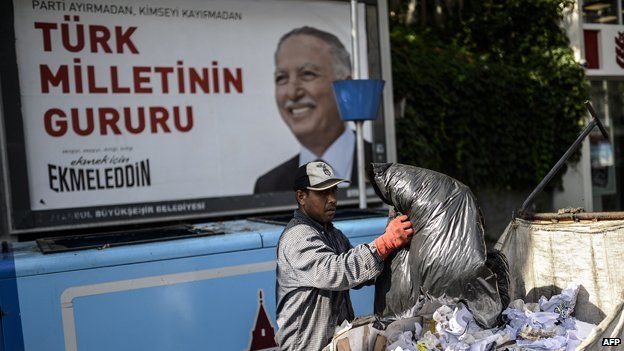
But no, Teflon Tayyip, as he is known in more irreverent Turkish circles, is still a force to be reckoned with and on Sunday he will make a bid to be the democratically elected president of Turkey.

It is widely expected that he’ll succeed in taking his prime ministerial powers with him from parliament to the presidential palace – Putin-style. Not even the recent corruption allegations made by his former political allies, his habit of locking up anyone who disagrees with him, nor the government’s inadequate reaction to the Soma mining disaster in May, in which 301 miners died, have seriously dented his chances.

Likewise abroad, diplomats roll their eyes in frustration at any mention of his name. But any inclination of politicians to publically criticise Teflon Tayyip is quashed when their advisers point out Turkey’s crucial diplomatic role in the region. Not just in dealing with Syrian refugees but also in coping with the jihadists of the Islamic State in northern Iraq.

This means Mr Erdogan is not overly troubled by what his friends in London, Brussels or Washington say about him on or off the record. What he is intent on now is remaining in power until the centenary of the Turkish republic in 2023.

And he will probably succeed because, while Turkey is not a liberal democracy, it is still a democracy, and enough people will vote for him.

Many Turks like the new roads, metro lines, high-speed rail links and shiny hotels which have sprung up across Istanbul, and the whole of Turkey, providing a boost for the economy. The AKP has also improved social welfare and health care provision for ordinary working class Turks.

The harsh reality is that a significant proportion of people in Turkey don’t give two hoots about the liberal secular elite and their over-educated, idealistic, eco-friendly offspring. “They had their turn and now it’s ours,” said a man playing backgammon in a tea shop on a narrow sloping street in the less trendy Tarlabasi district on the other side of Taksim Square. And so Mr Erdogan can continue to accumulate power and influence because enough of the electorate don’t care about the AKP’s cronyism, control of the media, alleged corruption or even the suggestion by the deputy prime minister that women shouldn’t laugh in public. It seems those who oppose the AKP know they are beaten – for now.

It is such a foregone conclusion that the prime minister will now become the president that protests – and the prospect of another tear-gassing – are just not worth the bother. Hardcore activists remain, of course, but most Turks, even those bitterly opposed to Mr Erdogan, would rather stay at home and watch the telly with their feet up. And perhaps you can’t blame them – it’s not pleasant being tear-gassed after all.

No, you’re not entitled to your opinion

Source: http://theconversation.com/no-youre-not-entitled-to-your-opinion-9978

October 5, 2012 6.28am AEST

Every year, I try to do at least two things with my students at least once. First, I make a point of addressing them as “philosophers” – a bit cheesy, but hopefully it encourages active learning. Secondly, I say something like this: “I’m sure you’ve heard the expression ‘everyone is entitled to their opinion.’ Perhaps you’ve even said it yourself, maybe to head off an argument or bring one to a close. Well, as soon as you walk into this room, it’s no longer true. You are not entitled to your opinion. You are only entitled to what you can argue for.”

A bit harsh? Perhaps, but philosophy teachers owe it to our students to teach them how to construct and defend an argument – and to recognize when a belief has become indefensible.

The problem with “I’m entitled to my opinion” is that, all too often, it’s used to shelter beliefs that should have been abandoned. It becomes shorthand for “I can say or think whatever I like” – and by extension, continuing to argue is somehow disrespectful. And this attitude feeds, I suggest, into the false equivalence between experts and non-experts that is an increasingly pernicious feature of our public discourse.

Firstly, what’s an opinion? Plato distinguished between opinion or common belief (doxa) and certain knowledge, and that’s still a workable distinction today: unlike “1+1=2” or “there are no square circles,” an opinion has a degree of subjectivity and uncertainty to it. But “opinion” ranges from tastes or preferences, through views about questions that concern most people such as prudence or politics, to views grounded in technical expertise, such as legal or scientific opinions.

You can’t really argue about the first kind of opinion. I’d be silly to insist that you’re wrong to think strawberry ice cream is better than chocolate. The problem is that sometimes we implicitly seem to take opinions of the second and even the third sort to be unarguable in the way questions of taste are. Perhaps that’s one reason (no doubt there are others) why enthusiastic amateurs think they’re entitled to disagree with climate scientists and immunologists and have their views “respected.”

Meryl Dorey is the leader of the Australian Vaccination Network, which despite the name is vehemently anti-vaccine. Ms. Dorey has no medical qualifications, but argues that if Bob Brown is allowed to comment on nuclear power despite not being a scientist, she should be allowed to comment on vaccines. But no-one assumes Dr. Brown is an authority on the physics of nuclear fission; his job is to comment on the policy responses to the science, not the science itself.

So what does it mean to be “entitled” to an opinion? If “Everyone’s entitled to their opinion” just means no-one has the right to stop people thinking and saying whatever they want, then the statement is true, but fairly trivial. No one can stop you saying that vaccines cause autism, no matter how many times that claim has been disproven.

But if ‘entitled to an opinion’ means ‘entitled to have your views treated as serious candidates for the truth’ then it’s pretty clearly false. And this too is a distinction that tends to get blurred. On Monday, the ABC’s Mediawatch program took WIN-TV Wollongong to task for running a story on a measles outbreak which included comment from – you guessed it – Meryl Dorey. In a response to a viewer complaint, WIN said that the story was “accurate, fair and balanced and presented the views of the medical practitioners and of the choice groups.”

But this implies an equal right to be heard on a matter in which only one of the two parties has the relevant expertise. Again, if this was about policy responses to science, this would be reasonable. But the so-called “debate” here is about the science itself, and the “choice groups” simply don’t have a claim on air time if that’s where the disagreement is supposed to lie.

Mediawatch host Jonathan Holmes was considerably more blunt: “there’s evidence, and there’s bulldust,” and it’s not part of a reporter’s job to give bulldust equal time with serious expertise. The response from anti-vaccination voices was predictable. On the Mediawatch site, Ms. Dorey accused the ABC of “openly calling for censorship of a scientific debate.” This response confuses not having your views taken seriously with not being allowed to hold or express those views at all – or to borrow a phrase from Andrew Brown, it “confuses losing an argument with losing the right to argue.” Again, two senses of “entitlement” to an opinion are being conflated here.

So next time you hear someone declare they’re entitled to their opinion, ask them why they think that. Chances are, if nothing else, you’ll end up having a more enjoyable conversation that way.

Read more from Patrick Stokes: The ethics of bravery

The caring child: How to teach empathy (age 5)

IN THIS ARTICLE

By Mary VanClay Reviewed by the BabyCenter Medical Advisory Board Last updated: March 2017

What to expect at this age

Kids don’t have the cognitive skills to truly understand the concept of empathy until they’re 8 or 9. But 5-year-olds, usually highly preoccupied with fairness, are concerned about being treated well, and they want others – friends, strangers, even characters in books – to be treated well too. Here’s how to nurture these budding displays of empathy.

What you can do

Label the feeling. Your kindergartner will be able to understand and manage her emotions much better if she can recognize her feelings. So put a name to her behavior as often as you can. Say, for instance, “It was very kind of you to talk to that boy who was all alone on the swing. He might have been feeling lonely.” By hearing that you noticed her behavior, she’ll learn that you recognize and value her responsiveness.

She needs to understand negative emotions, too, so don’t be afraid to calmly point out when your 5-year-old’s being less than caring. Try saying, “It made your baby brother really sad when you grabbed his rattle. What could you do to help him feel better?”

Another way to teach your kindergartner to understand and define her emotions is to have a “feeling of the week.” Each week, put up on the refrigerator or bulletin board a picture of someone experiencing a basic emotion – sadness, happiness, surprise, anger. Work your way up to more complicated emotions, such as frustration, nervousness, and jealousy (clip magazine photos or illustrations that capture these feelings). Talk with your child about times when she felt the same way.

Praise empathetic behavior. When your kindergartner performs an act of kindness, tell her what she did right, and be as specific as possible: “You were very generous to share your special stickers with Tommy. I saw him smiling, and I know he was happy.”

Encourage your kindergartner to talk about her feelings – and yours. Let her know that you care about how she feels by listening intently. If she has a story about someone else (“Tommy got in trouble for shoving Therese, and I don’t think that was fair”), listen to her views before offering your own. And when she says she’s mad, paraphrase what she says – “Oh, you’re feeling grumpy today?” – so she knows you’re listening and feels encouraged to elaborate. Similarly, share your own feelings with her: “It makes me feel bad when you yell at me. Let’s think of another way for you to tell me you’re angry.”

This is also a fine time to share some of your feelings that don’t relate to your child’s actions. You can say, “I’m frustrated that I didn’t meet my deadline at work today” or “I got annoyed with Aunt Mary today, just like you get mad at your sister. But we’re still friends.”

Your 5-year-old will learn that adults have feelings and emotions too, that they’re a normal part of life, and that learning to cope with them is an important part of growing up.

Point out other people’s behavior. Teach your kindergartner to notice when someone else has behaved kindly. You might say, for example, “Remember how friendly your new teacher was on the first day of school? She helped you feel less scared.” By doing this, you reinforce her understanding of how people’s actions can affect her emotionally. Books also provide wonderful opportunities to explore emotions. Ask your 5-year-old how she thinks the children in a fairy tale are feeling, and whether she thinks she’d be scared or brave in the same situation. Tell her how you might feel too.

Teach nonverbal cues. At the playground or park, find a quiet place where you and your 5-year-old can sit and observe others without being rude. Play a game of guessing what other people are feeling, and explain the specific reasons for your own guesses: “See that man? He’s walking really quickly and his shoulders are hunched, and he’s making a mean face. I think he’s angry about something.”

Teach basic rules of politeness. Good manners are a great way for your kindergartner to show caring and respect for others. “Please” and “thank you” are phrases 5-year-olds should use automatically. Explain that you’re more inclined to hand over her sandwich when she asks for it politely and that you don’t like it when she orders you around. Even if these phrases sound rote at times, they teach kids how important it is to treat others with respect. Of course, being polite to her is worth a thousand rules and explanations. Say “please” and “thank you” regularly to your kindergartner and to others, and she’ll learn that these phrases are part of normal communication, both at home and out in public.

Don’t use anger to control your child. Though it’s easy to get upset when she sneaks the candy you told her not to eat before dinner, try not to use anger as a tool to manage her behavior. “When you say, ‘I’m really mad at you,’ children shut down and withdraw,” says Jerry L. Wyckoff, a psychologist and coauthor of Twenty Teachable Virtues. Teaching by instruction and example is much more effective, although it’s important to let your child know you’re disappointed. Instead of getting angry, take a moment to calm yourself down. Then say firmly, “I know you wanted that candy, but it upsets me that you ignored what I told you. Now you won’t be allowed to have dessert tonight.”

Give your kindergartner jobs. Research suggests that children who learn responsibility also learn altruism and caring. Five-year-olds can take over simple jobs, such as feeding the dog or clearing the dinner table. Don’t forget to pile on the praise for a job well done and point out that your child’s actions benefit everyone: “Thanks for remembering to set the table. We’re all really hungry, and you’ve helped us sit down to dinner a lot faster.”

Ask her to think of others. Each day is full of opportunities to remind your 5-year-old to think about how someone else might feel. “It’s simple – say you’re in the grocery store and your child asks for some licorice. Say, ‘Sure. Now, do you think your little sister would like us to bring home a treat for her?'” suggests Wayne Dosick, a rabbi and the author of Golden Rules: The Ten Ethical Values Parents Need to Teach Their Children.

Pay attention to your child’s social life. Asking specific questions about people in her daily life reinforces the importance of social relationships and treating people well. Questions such as “Who did you play with at recess today?” and “What did you talk to Tommy about on the bus?” can lead to discussions about treating others with respect and kindness.

Involve your kindergartner in charitable activities. Acts of kindness and charity are an excellent way to teach her empathy. When you take a meal to a sick neighbor or a friend with a new baby, let her help plan the menu. She can pack a bag of clothes to donate to a local charity and choose some of the toys she’s outgrown to give as well. Help her write a thank-you letter to Grandma for a birthday present. Explain that sometimes people need extra help, don’t have the basics that they need, or would just feel happy to receive a sign of appreciation.

Expect the same behavior from boys and girls. Our society commonly considers men to be less empathetic than women. So sometimes, even without realizing it, we demand and praise empathetic behavior less often in boys than in girls.

As Wyckoff says, “We set up this ‘boy code’ that goes on and on throughout their lives – ‘I gotta be tough.’ But if we’re careful to teach them, boys can learn empathy just like girls.”

Erdoğan’s referendum victory spells the end of Turkey as we know it

The Guardaian: Erdoğan’s referendum victory spells the end of Turkey as we know it

With the result of Sunday’s referendum on its constitution, Turkey as we know it is over; it is history.
The architecture of its governance designed by Mustafa Kemal Atatürk – Turkey’s founder – has, after a wobbly series of experiments with the military and a secular elite in charge, been dismantled by the leader of the Justice and Development party (AKP). The collapse of the rule of law that took place in slow motion after the Gezi Park protests has been followed by the erosion of the separation of powers and the annihilation of the independent media.
It’s hard not to notice the striking resemblance to the sequence of events in Germany from 1933: the Reichstag fire, the Night of the Long Knives, the infamous referendum in 1934. The similarities give one a powerful sense of history copy-and-pasting itself. No wonder those who once shrugged at such comparisons are now in shock – particularly when they heard the harsh rhetoric of President Erdoğan‘s victory speech: he pledged to an ecstatic crowd that one of his highest priorities is to reintroduce capital punishment.
This is one possible interpretation. Another is that Sunday’s result was the closing of a chapter in which the “periphery” of Turkish society – rural and mainly pious – took its revenge on the “centre” of the old republic. That is what some figures of the AKP have called “the silent revolution”.
“The Turkish republic has an undeniably complicated history,” wrote Steven Cook, from the Council on Foreign Relations, in an essay for Foreign Policy, entitled RIP Turkey; 1921-2017.
“It is an enormous achievement. In the space of almost a century, a largely agrarian society that had been devastated by war was transformed into a prosperous power that wielded influence in its own region and well beyond. At the same time, modern Turkey’s history has also been nondemocratic, repressive and sometimes violent. It thus makes perfect political sense for Erdoğan to seek the transformation of Turkey by empowering the presidency and thereby closing off the possibility once and for all that people like him will be victims of the republic.”
It has been painful for me to witness the immense disappointment of Turkish intellectuals, resilient by tradition, and mainly left-leaning. All I could hear by phone or on social media was tormented despair – a crushing sense of defeat. What united all those in academia and the media or in NGOs, regardless of their political stripes, was that they had hoped for democratic change under the AKP.
Many of them had given credit to the party, and its early pledges and steps towards an order where the sharing of power would break the vicious circle of the republic. They wanted to believe in human rights, freedom and an end to the decades-long Kurdish conflict. But the deliberate reversal of democratisation left all of them feeling they had been duped.
This conclusion became undeniable when last summer’s attempted coup – the details of which are still unclear – led to an immense purge. Given this mood of despair and the sense of defeat, we should expect another exodus of fine human resources in the coming months and years.
Journalists – such as me, abroad, or at home – will find themselves challenged even more after the referendum. Coverage of corruption will be a daredevil act, severe measures against critical journalism will continue and the remaining resistance of media proprietors will vanish.
The Turkish media will begin to resemble those of the Central Asian republics, where only mouthpieces for those in power are allowed to exist. Inevitably, these conditions will shift the epicentre of independent journalism to outside the borders of Turkey. My colleagues have already realised that their dreams of a dignified fourth estate were nothing but an illusion.
“At the end of the day, Erdoğan is simply replacing one form of authoritarianism with another,” wrote Cook.
“The Turkish republic has always been flawed, but it always contained the aspiration that – against the backdrop of the principles to which successive constitutions claimed fidelity – it could become a democracy. Erdoğan’s new Turkey closes off that prospect.”
The old republic was already ailing, and it has just been dealt its final blow.

Erdogan claims victory in Turkey’s referendum

Source: http://www.economist.com/news/europe/21720911-turks-vote-yes-constitutional-overhaul-narrow-margin-erdogan-claims-victory-turkeys

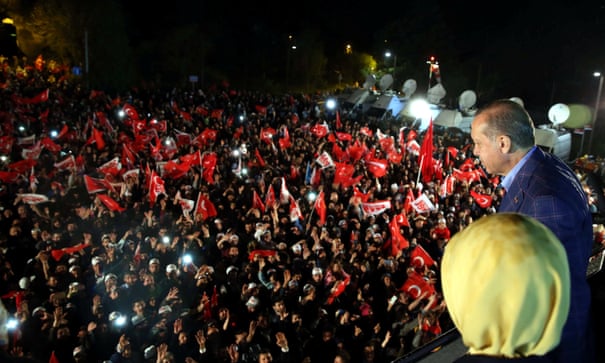
IT WAS a vote that turned out to be as controversial as it was hotly contested. Even before all of the ballots had been counted, Recep Tayyip Erdogan, Turkey’s president, stepped in front of a crowd of supporters in Istanbul and proclaimed victory. “My nation stood upright and undivided,” he said, referring to the referendum on a constitution that will give him new, virtually unchecked powers. “April 16th was a victory for all of Turkey.”
Yet it was hardly the win Mr Erdogan had expected. The Yes camp, which the president headed, limped away with just 51.4% of the vote. The opposition accused the country’s electoral authority of foul play. Outside observers charged the government with stacking the odds in its favour. Anti-government demonstrations broke out in a number of Turkish cities. The country awoke the following morning more divided than ever.
The new constitution will bring about the most radical overhaul of the state since 1923, when it went from being an imperial Islamic power to a secular republic under Kemal Ataturk, the founder of modern Turkey. After fresh elections in 2019, Mr Erdogan will rule uncontested, appointing senior officials, judges and members of his own cabinet, with little oversight by an expanded but weakened parliament. The office of prime minister will cease to exist.
Yet the constitution is already mired in controversy. The main opposition, the secular Republican People’s party (CHP), has asked for the referendum results to be annulled. A last-minute decision by the country’s electoral board to accept unstamped ballot papers created the risk of mass fraud, the CHP said. Claims of vote-rigging, especially in the Kurdish southeast, have been pouring in. In a scathing assessment, observers from the Organisation for Security and Co-operation in Europe (OSCE), an intergovernmental body, said the board’s move had “undermined an important safeguard and contradicted the law”. A state of emergency imposed shortly after an attempted coup in July, accompanied by nearly 50,000 arrests and a climate of intimidation and nationalist hysteria, was hardly the proper setting for a referendum on systemic changes. “Voters were not provided with impartial information about key aspects of the reform and limitations on fundamental freedoms had a negative effect,” the OSCE said.
There is next to no chance of a recount. The electoral board rejected the opposition’s appeal on April 19th, but promised to look into individual allegations of fraud. (Official results are expected towards the end of April.) Mr Erdogan asked foreign observers to keep their concerns to themselves. “We don’t care about the opinions of ‘Hans’ or ‘George’,” he said. His prime minister added: “The people’s decision is clear and the result is a Yes.”
The allegations will haunt Mr Erdogan for years, leaving the country even more polarised than before. Mr Erdogan might be “the most unassailable Turkish leader since Ataturk but this legitimacy issue will hang over his head,” says Soner Cagaptay, a fellow at the Washington Institute.
International reaction has been muted. Other than Donald Trump’s America, which joined model democracies such as Russia, Sudan, Hungary and Djibouti in congratulating Mr Erdogan, no leader of a big Western country has welcomed the vote. Britain, Germany and the EU called instead for dialogue and an impartial inquiry. Mr Erdogan did not appear particularly keen to rebuild bridges with Europe: on the day of the vote, he pledged once again to do his part to reinstate the death penalty, which would threaten the membership of Turkey in the Council of Europe and torpedo its already comatose accession talks with the EU.

One man show

Supporters of the new constitution say it will improve decision-making by concentrating power in Mr Erdogan’s hands, precluding unwieldy political coalitions and neutralising powerful unelected officials. “From now on, it’s the people who are going to rule Turkey,” says Ufuk, a young Yes voter relaxing outside a polling booth.
Opponents say it will transform the government, already dominated by Mr Erdogan, into an authoritarian regime. “This is the beginning of one-man rule,” says Ali Bayramoglu, a columnist who used to be sympathetic to the ruling Justice and Development (AK) party. After he said earlier this month that he would oppose the new constitution, Mr Bayramoglu was assaulted by AK supporters at a polling station on the day of the vote.
Some of the changes will come into effect immediately. An impartiality clause that required the president to sever links with any political party (which he flouted) will expire. Mr Erdogan is expected formally to rejoin AK as soon as official results are announced this week. Within a month, the country’s most influential judicial body, the council of judges and prosecutors, will shrink and move from a system of election by peers to one of appointment by parliament and the president.
Mr Erdogan’s initial comments suggest he will disregard the slim margin of victory and portray the referendum as a sign of support for his crackdown. The day after the vote, his government extended the state of emergency until July 19th. Two days after that, police arrested some 38 people accused of participating in protests.
Turkey is saddled with a constitution opposed by nearly half of all voters in a referendum tainted by fraud claims and held under conditions that made open debate impossible. Mr Erdogan has the powers he has long coveted. They come at the cost of tension at home and isolation abroad.
This article appeared in the Europe section of the print edition under the headline “Erdogan the maleficent”

Turkey’s democracy has died

Turkey’s Democracy Has Died (CNN)

April 2017

(CNN)Turkish President Recep Tayyip Erdogan has declared victory in a referendum over a new constitution that will make him far more powerful, potentially for many more years to come. The result, which the opposition is calling fraudulent, promises to make Turkey less democratic, more bitterly divided and more religious than ever.

It comes as no surprise that at the last minute, when the counting showed the “no” vote was threatening the thin lead of the pro-Erdogan “Yes” vote, electoral authorities stepped in to announce they would allow unsealed ballots to be counted, in contravention to the rules.

Already the lead-up to the vote gave enormous advantages to the yes camp, particularly in the form of media coverage. Meanwhile, opponents faced intimidation and the risk of job loss if they publicly voiced their opinions. Now, with the results showing a narrow 51%-to-49% victory for Erdogan, the opposition says the vote counting, too, was marred by fraud and vows to challenge it.

Still, it looks all but certain the President has won a historic victory that will not only transform the country he has led since 2013, but will also create a path for him to remain in office until 2029. Erdogan, a charismatic, authoritarian populist with an agenda steeped in Islam, has become the focal point of deep divisions in the country, and this referendum will make those divisions only more acrimonious and destabilizing.

With barely half the country supporting his push for more power, and with the three largest cities — Istanbul, Ankara and Izmir — voting no, Erdogan will assume his new powers under a cloud of doubt. That sense of insecurity is likely to make Erdogan more, not less, autocratic.

Erdogan has not been a conciliatory leader. Instead, he has ruled by stoking ideological, social and sectarian divisions. He has responded to challenges, even peaceful and democratic ones, by crushing the opposition. And he has taken advantage of every opportunity — and every challenge — to bolster his power.

No opportunity is greater than the one proffered by Sunday’s referendum. The referendum’s win approves a new constitution containing 18 amendments that will phase in gradually, turning Turkey’s parliamentary system into a presidential one.

Until now, the President was supposed to be a figurehead, unaffiliated with any political party and without great powers. Under Erdogan, that figurehead role was never real. But the new system will officially transform the ceremonial President into a commanding executive.

Erdogan, who has never lost an election, will resume his role as the leader of the Justice and Development Party, or AKP, which he founded and used as the vehicle for his meteoric rise from soccer player into Turkey’s most powerful leader in nearly a century.

He will lead the party that holds the majority in parliament, controlling both the legislative and executive branches, and soon strengthening his dominance over the judiciary. Checks and balances will fade away. New elections will be held in 2019, at which time the prime minister’s position will be abolished. By then, the President will be able to appoint 12 out of the top court’s 15 judges, select the members of the National Security Council and play a prominent role in drafting legislation.

Critics say Erdogan will, in effect, become a dictator. Erdogan never quite left the helm of AKP even as he transitioned into the presidency, and when he faced down an attempted overthrow last July, he used the opportunity to purge the country of anyone who might stand in the way of his political ambitions.

The 2016 coup attempt proved so useful to Erdogan that many still question if he didn’t orchestrate it himself.

Within hours of regaining power, he launched a crackdown of stunning magnitude, imprisoning tens of thousands of people, and removing hundreds of thousands from their jobs in the military, universities, courts and elsewhere.

The coup failed, and real democracy died in its wake. But long before the coup, Erdogan’s anti-democratic tendencies were already in stark display. Years before, Turkey had already imprisoned more journalists than any country, as it does today. And that was just one of the signs that liberal, pluralist democracy was not Erdogan’s cup of tea.

While much of the country still looked forward to seeing Turkey draw closer to the liberal, modern West and join the European Union, Erdogan fired up the crowds with nationalist, anti-Western rhetoric.

The President and his agenda are a big hit with about half the population, mostly the rural, conservative segments. But it is anathema to the other half. For urban Turks, and for others who still embrace the secularism of Kemal Ataturk, Erdogan’s conservative, religion-driven agenda is hard to stomach.

Worse yet, the President appears determined to challenge Kemalism with a new blend of nationalism and religion that puts him at the top. His new $600 million, 1,100-room presidential palace has become symbolic evidence for critics’ claims that he wants to be the new Sultan, reprising Ottoman glory days, when one man had full power and Turkey led the Muslim world.

Many worry about how far the President will go in pushing his socially conservative and religious views as he tries to reshape the country. Women were incensed when the President spoke of the “delicate nature” of women and declared that “Our religion [Islam] has defined a position for women: Motherhood.”

But perhaps nothing puts the Islamization agenda in sharper focus than the government’s education plans for a country in which secularism was a central tenet. Erdogan has said he wants to raise a “pious generation,” and the education ministry has announced a new curriculum that includes massive amounts of religious text, and a heroic depiction of Erdogan’s win against the July coup plotters.

What lies ahead for the divided Turkish people is a much more intense Erdogan era. The President will now be empowered to move forward with his plan to erode secularism and consolidate his own power.

For those who want Turkey to continue on the path of a democracy, with rule of law, independent judges, free expression and equality for all, the road ahead just became much, much steeper.

Curried Sausages

Ingredients

  • 8 sausages (beef, chicken, lamb or pork sausages)
  • 1 tbsp oil
  • 2 onions
  • 2 garlic cloves
  • 1 tbsp grated fresh ginger
  • 2 carrots, quartered, then cut into 1/2 in chunks
  • 2 potatoes, diced
  • 1 tbsp curry powder
  • 2 tbsp tomato paste
  • 2 tbsp fruit chutney
  • 1/2 cup apple  sauce
  • 1 cup chicken stock chicken stock
  • 400ml can coconut milk
  • 1 cup frozen peas (optional)
  • salt and pepper

DIRECTIONS

  1. Cover the sausages with cold water; bring to the boil and simmer about 5 minutes.
  2. Drain, cool, remove skins and cut each into 4 or 5 pieces.
  3. Heat the oil in a large saucepan and fry the onion, garlic and ginger, carrots and potatoes, stirring until the onions are soft. Add the curry powder and cook a minute or two.
  4. Add the tomato paste, chutney, apple sauce, stock and coconut milk. Stir well, then return the sausage chunks to the saucepan.
  5. Bring too the boil then cover and simmer about 45 minutes. Remove the lid and allow to cook about 15 minutes more to reduce the sauce a bit. If you can’t be bothered, mix two tablespoon cornflour (corn starch) with 2 tablespoons water and stir this through to thicken.
  6. 1 cup of peas can be added in the last 15 minutes as well.
  7. Season with salt and pepper and serve garnished with copped fresh coriander.

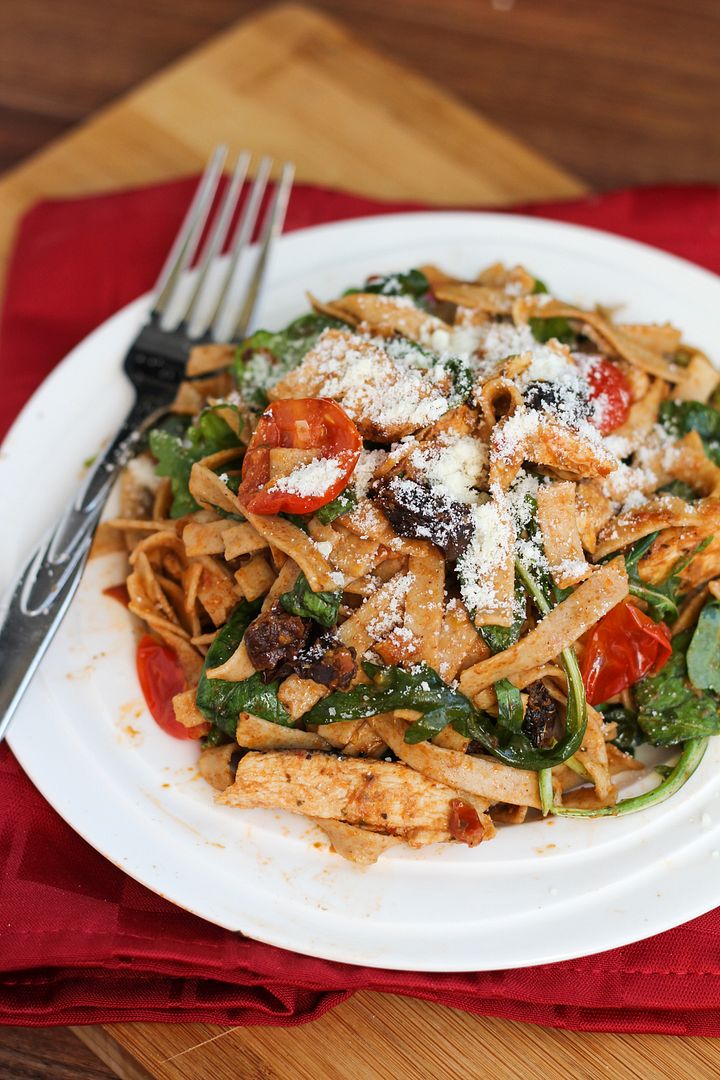
Sundried Tomato Pesto Pasta with Chicken, Spinach, & Tomatoes

Source: http://www.onceuponacuttingboard.com/2014/07/sundried-tomato-pesto-pasta-with.html

Serves 4-6

Ingredients

  • 2 boneless skinless chicken breasts
  • 85g sundried tomatoes – dry in a bag (not oil packed)
  • 350g package of whole wheat pasta – I used fettucine
  • 2 teaspoons olive oil
  • 2-3 cloves of garlic, minced
  • 250g grape tomatoes, halved
  • 1/2 cup sundried tomato pesto
  • 150g baby spinach
  • Parmesan cheese for topping

Method

  1. Season chicken breasts, if desired (I used salt, pepper, and dried basil) and cook however you prefer. I saute mine in a skillet over medium-high heat for about 5 minutes per side, let rest, then slice.
  2. Meanwhile, bring a large pot of water to a boil.
  3. Add sundried tomatoes and blanch for 2 minutes.
  4. Remove with a slotted spoon, let dry, and thinly slice.
  5. Use the same boiling water to add your pasta and cook according to package directions.
  6. Reserve 1 cup cooking water then drain pasta. While pasta is cooking, heat oil in a large skillet over medium-high heat.
  7. Add garlic and grape tomatoes and sautee until softened, about 5 minutes.
  8. Toss together the pasta, reserved cooking water, pesto, chicken slices, garlic & tomatoes, and sundried tomatoes.
  9. Stir in the spinach so it gets slightly wilted. Season the dish with salt and pepper if desired.
  10. Serve hot, topped with parmesan cheese.

Low Hassle Brunch Feast

Source: The Guardian

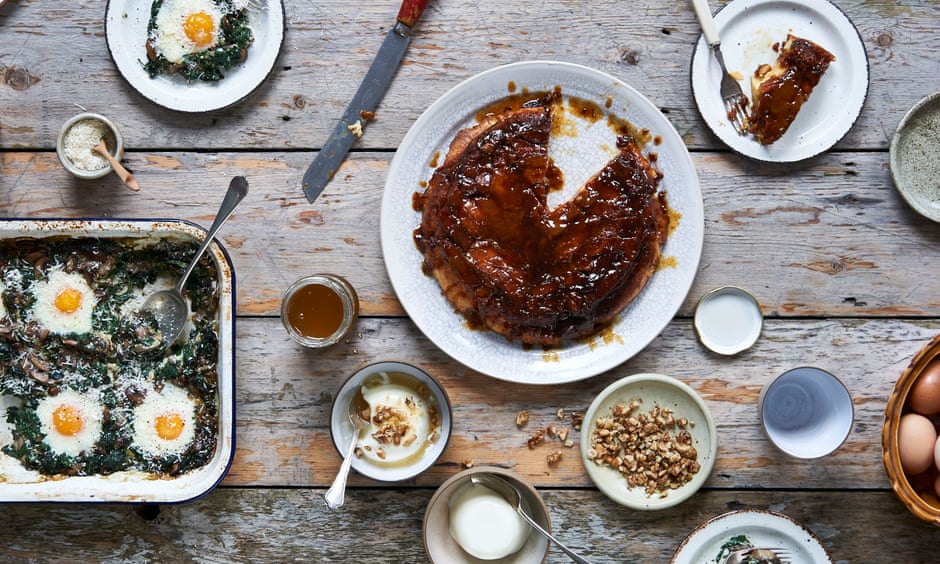
There is a rule when hosting brunch: avoid cooking on the day. Prep these recipes for eggs baked in spinach, salted caramel bread pudding and yoghurt panna cotta in advance, and your Easter weekend will be off to a winning start …
For someone who has no belief-based obligation to host an Easter brunch this weekend, I sure have a lot of strong opinions on how to best cook one, and that’s mostly because brunch parties are much more fun than dinner parties. From late morning to midday, we are all bright-eyed and better-rested, our homes are filled with sunlight, the coffee is free-flowing and no matter how long it goes on, even if everyone overstays, you’re still going to have an empty home by dinnertime.
My essential rule for hosting brunches is to sleep in, and barely to cook at all on the day. By focusing on recipes that can either be prepped the day before or become better after some time to rest, hosting a brunch becomes almost as luxurious as attending one. My favourite breakfast casserole bakes a dozen eggs in nests of creamed spinach, mushrooms and parmesan that looks, coincidentally, a lot like an Easter basket. It’s also gluten-, grain- and meat-free, so it accommodates all sorts of diets, and I get everything done the night before so all I have to do is crack in some eggs and turn on the oven in the morning. A panna cotta made with Greek yoghurt and finished with walnuts and honey is just a little sweet, but still decadent. You can serve it in wedges or individual cups and you can make it even two days in advance. Finally, the icing on the cake (or, forgive me, the sauce on the pudding) is a stunning upside-down salted caramel bread pudding that’s basically like the lovechild of french toast and a tarte tatin., which you will have no choice but to make for every brunch you ever host after this, because your friends and family will insist. Please, consider yourself warned.

Baked eggs with spinach and mushrooms

Serves 6-12

Ingredients

  • 1kg spinach, washed
  • 4 tbsp unsalted butter
  • 1 onion, finely chopped
  • 3 garlic cloves, minced
  • 500g mushrooms, thinly sliced
  • 225g whipping cream
  • ¾ tsp salt
  • Freshly ground black pepper
  • ¼ tsp nutmeg, grated (optional)
  • 12 large eggs
  • 6 tbsp parmesan, finely grated

Method

  1. Bring 7mm water to a boil in a large ovenproof frying pan. Add half the spinach and cook, turning, until wilted – about 30 seconds. Add the remaining spinach and wilt. Cook, covered, over a moderately high heat until tender – just 1-2 minutes. Drain and cool under cold running water. Gently squeeze to remove as much liquid as possible, then coarsely chop.
  2. Wipe the pan dry, then melt the butter over a medium-low heat. Cook the onion and garlic for 2-3 minutes, or until softened. Add the mushrooms, raise the heat to medium-high, for about 5 minutes or until softened.
  3. Stir in the cream, salt, pepper, nutmeg (if using), and the chopped spinach and bring back to a simmer. Remove the pan from the heat.
  4. When you’re ready to bake, about 30 minutes before serving, heat the oven to 230C/450F/gas mark 8.
  5. Put the spinach mix in a baking dish – or use your pan if ovenproof – and make 12 wells in it. Crack an egg into each. Bake at the top of the oven until the whites are firm and yolks are still runny – 15-30 minutes depending on ovens and baking vessel. It’s better to have to check more often than to let them overcook. It is nearly impossible to get all 12 eggs to cook evenly. The ones in the centre will be more runny; at the edges, they’ll be more firm. But don’t fret. I’ve found that almost all people have an egg preference (more runny vs. more firm) and each egg manages to find the right home. Just ask people their preference as you serve them.)
  6. Sprinkle with salt and pepper and grated parmesan before serving.

Morning bread pudding with salted caramel

Serves 6-10

This recipe is from none other than Food52 co-founder Amanda Hesser. It is an overnight dish, ideally. Set it up before you go to bed and all you have to do when you wake up is bake it and invert it on to a serving dish. The longer it soaks, the more the bread and custard become one, but I think as long as it has an hour to soak, it will be good enough.

Ingredients

  • 170g sugar plus 2 tbsp extra (optional)
  • 6 tbsp unsalted butter
  • 2-3 pinches salt
  • 300-350g brioche loaf or challah bread (cut into 7mm-thick, 8cm-wide slices)
  • 8 large eggs
  • 60g mascarpone, plus more for serving
  • 250ml milk
  • ¼ tsp almond extract

Method

  1. Combine the sugar, butter and salt over a medium heat for 7-10 minutes, until the sugar dissolves and begins to brown. Reduce the heat to medium-low, stir with a spatula so that it browns evenly. You will find that the butter separates from the melting sugar and this is just fine. Your caramel is done when it reaches a copper colour.
  2. Pour over the base of a 2-litre oval gratin/roasting dish, or deep-dish pie pan. Transfer to the fridge until the caramel is cold and solid – about 30 minutes. Once chilled, arrange the bread slices around the dish with the heels in the centre and overlapping slightly.
  3. Whisk together the eggs, 2 tbsp sugar (if using) and the mascarpone until very smooth. Add the milk and almond extract. Pour over the bread; saturate all of it. Cover tightly with plastic wrap and chill overnight. If your bread seems too high in the vessel to get a good soak, you can weight it with a plate in the fridge.
  4. Take your dish from the fridge 1 hour before you want to bake it. Set the oven to 190C. Bake for 30-35 minutes, until moist, but not wet in the centre.
  5. Run a knife around the edge of the dish, to loosen. Place a serving plate over the top of the dish and flip. Serve, cutting it into wedges at the table and spooning a healthy dollop of mascarpone on to each plate.

Yoghurt panna cotta with honey and walnuts

As far as panna cottas go, this is on the soft side but will still slice or hold form.
Serves 7-8

Ingredients

  • Flavourless oil, such as sunflower
  • 4 tbsp water
  • 2 ½ tsp plain gelatin (or vegetarian equivalent)
  • 460g Greek yoghurt
  • 475ml milk or whipping cream (or a mix of the two)
  • 50-100g granulated sugar
  • Juice of ½ a lemon
  • Honey, to serve
  • A big handful of walnuts, toasted,cooled and coarsely chopped

Method

  1. If you plan to unmould the panna cotta, coat a 25cm round cake pan or smaller dessert cups with a little oil.
  2. Put the water in a small bowl. Stir in the gelatin and set aside until it has softened – about 15 minutes.
  3. Whisk together all of the yoghurt and 250ml of the milk, cream or mixture thereof. Bring the remaining milk or cream and sugar to a simmer. Stir in the water-gelatin mixture (it will dissolve immediately) and remove from heat. Whisk this mixture into the yoghurt mixture, then stir in the lemon juice at the end.
  4. Pour the mixture into the cake pan or smaller cups, then chill in the fridge for at least 2 hours for small cups and up to 8 for a large pan. It’s best to do this the night before you need it, to be safe.
  5. To unmould the cake pan, fill a larger baking dish with 3cm boiling water. Dip the pan in it for 10 seconds, then flip it out on to a flat, round plate. (A curved one will cause the panna cotta to appear sunken in the middle.)To unmold smaller dishes, bring a small saucepan of water to a simmer and dip the bottom of a small panna cotta cup in one for five seconds, then invert it on to a plate. Repeat with remaining cups.
  6. Right before you serving, sprinkle the panna cotta with walnuts and drizzle it with honey. This needs to be done right before you serve it, because the honey will (unfortunately) become liquidy and roll off if it, should it sit on the panna cotta for too long.