I write about science and international development (broadly defined).Follow
Nov 26, 2019,05:57pm EST
This article is more than 4 years old.
High-level nuclear waste consists largely of spent fuel from nuclear reactors. Though it makes up a small proportion of overall waste volumes, it accounts for the majority of radioactivity. This most potent form of nuclear waste, according to some, needs to be safely stored for up to a million years. Yes, 1 million years – in other words, a far longer stretch of time than the period since Neanderthals cropped up. This is an estimate of the length of time needed to ensure radioactive decay.
Yet existing and planned nuclear waste sites operate on much shorter timeframes: often 10,000 or 100,000 years. These are still such unimaginably vast lengths of time that regulatory authorities decide on them, in part, based on how long ice ages are expected to last. To some extent all of these figures are little better than educated guesses.
They’re also such mind-bogglingly long periods that in 1981, the US Department of Energy established the Human Interference Task Force to devise ways to warn future generations of the dangerous contents of nuclear repositories. This was a challenging task then, and nuclear semiotics remains the stuff of science fiction. Written language has only existed for about 5,500 years, so there’s no guarantee that Earth’s inhabitants, tens of thousands of years from now, would understand any of the writing systems currently in use. The meanings of visual signs also drift over time. The more whimsical “ray cat solution,” of genetically engineering cats to glow in the presence of radioactive material, is even less reliable.
A worker blows away salt in the Waste Isolation Pilot Plant in New Mexico (Photo by Joe Raedle)GETTY IMAGES
After brief flirtations with amusingly bad ideas including shooting nuclear waste into space, the consensus among nuclear scientists is that the best option for dealing with high-level nuclear waste is deep geological disposal. One of the International Atomic Energy Agency’s conditions for such a geological site is low groundwater content, which has been stable for at least tens of thousands of years, and geological stability, over millions of years. Thus, Japan, with its seismic instability, is unlikely to have any suitable candidates for deep geological disposal.
Like many countries, Japan is relying on interim storage of high-level waste while hoping that longer-term solutions will present themselves eventually. In fact, no country even has an operational deep geological repository for spent nuclear fuel. (The US has a deep disposal site in New Mexico for “transuranic” waste from nuclear weapons, which is long-lived and intermediate-level waste whose elements have higher numbers than uranium in the periodic table.)
It’s challenging to find a site that ticks all of the geological boxes (including relatively impermeable material with little risk of water infiltration), and thatisn’t politically controversial. To take two notable examples, communities in Nevada, US and Bure, France have hotly opposed plans to establish repositories. Given the history of environmental justice globally, it’s likely that any future locations approved for nuclear waste dumps will be found in poor areas.
Only one country, Finland, is even building a permanent spent-fuel repository. Even in Finland, however, it’s estimated that a license won’t be issued until 2024. Similar licenses for other European countries scouting out possible locations likely wouldn’t be available until 2050 in Germany and 2065 in the Czech Republic. And these countries are outnumbered by those that don’t even have an estimated timeframe for licensing, as they’re so far back in the process of searching for a site.
Preparing to move Chernobyl’s destroyed reactor no. 4 from its old sarcophagus (Photo by Brendan … [+]GETTY IMAGES
Strategies remain worryingly short-term, on a nuclear timescale. Chernobyl’s destroyed reactor no. 4, for instance, was encased in July 2019 in a massive steel “sarcophagus” that will only last 100 years. Not only will containers like this one fall short of the timescales needed for sufficient storage, but no country has allotted enough funds to cover nuclear waste disposal. In France and the US, according to the recently published World Nuclear Waste Report, the funding allocation only covers a third of the estimated costs. And the cost estimates that do exist rarely extend beyond several decades.
Essentially, we’re hoping that things will work out once future generations develop better technologies and find more funds to manage nuclear waste. It’s one of the most striking examples of the dangers of short-term thinking.
The ocean circulation in the north Atlantic is likely to collapse sooner than expected as a result of climate change, causing further upheaval in weather patterns around the globe, new peer-reviewed scientific analysis finds.
The latest study of the currents or “conveyor belt” that carry warmer water upwards from the tropics concludes the Atlantic Meridional Overturning Circulation (Amoc) will shut down at some point between 2025 and 2095, with the 2050s most likely.
The University of Copenhagen researchers predicted the outcome with 95 per cent confidence in the paper published in the journal Nature Communications.
The findings by Copenhagen professors Peter Ditlevsen and Susanne Ditlevsen contrast with the view of the UN Intergovernmental Panel on Climate Change that Amoc is unlikely to collapse this century, and some scientists remain wary of departing from the IPCC’s predictions.
A collapse of Amoc, which includes the Gulf Stream stretching from Florida to north-western Europe, would produce pronounced cooling across the northern hemisphere, leading to stormier winters and drier summers in Europe.
Conversely, heat would intensify further south, as less warmth is transferred to temperate and polar latitudes, and there would be large changes in tropical rainfall and monsoons.
It is one of the most feared of the “tipping points” for the planet, or irreversible changes, that are threatened by global warming.
“I was surprised we found that the tipping point would come so soon and that we could constrain its timing so strongly to the next 70 years,” said Peter Ditlevsen. He said the IPCC models were “too conservative” and did not take into account early warning signals of instability reported more recently.
Stefan Rahmstorf, professor of ocean physics at Potsdam University and one of Europe’s leading climate scientists, said the growing body of science around the world’s ocean current systems showed a marked shift.
“The findings are in line with a couple of other studies in recent years suggesting that the Amoc tipping point is perhaps much closer than we previously thought. The evidence is mounting and is in my view alarming.”
Tim Lenton, one of the world’s foremost experts on tipping points and professor of climate science at Exeter university, noted the study had “made important improvements to the methods of providing early warning of a climate tipping point directly from data”.
“Once past the tipping point, the collapse of the Amoc would be irreversible,” Lenton said. “The collapse and its impacts will take time to unfold, but how long is uncertain,” he added.
Other climate scientists were more doubtful about the data and analytical methods used by the Copenhagen researchers.
“It is an interesting paper and emphasises Amoc collapse as a reason for concern,” said Richard Wood, head of the climate and oceans group at the UK Met Office Hadley Centre. “But I’m not abandoning the IPCC view, expressed with medium confidence, that it won’t collapse this century, though we do expect a weakening of the Amoc.”
Geological evidence suggests that during the last ice ages drastic changes in Atlantic circulation took place within a decade or two, but some climate models predict that it might take a century or so for the Amoc to halt completely under 21st-century circumstances. Even a partial shutdown would exacerbate the disruption caused by global warming.
Other worrying manifestations of global warming in the oceans include exceptionally high sea surface temperatures now being recorded around temperate regions of the northern hemisphere — as much as 5C above average off the east coast of Canada — while sea ice around Antarctica is at an all-time winter low. These are not directly related to changes in the Amoc.
The Ditlevsens — a brother and sister research partnership — said their results added to the urgency of global action to cut greenhouse gases. But Susanne Ditlevsen was not optimistic about the chances of avoiding an Amoc collapse.
“From what I see in the data it doesn’t look as though we can reverse it, unless there is a huge change in political views everywhere in the world, including China and the United States,” she said.
A terrarium is a containment facility similar to an aquarium except it holds plants and not fish nor is it filled with water.
I decided to make a terrarium to learn about how they work and to learn about how plants and animals live together in an environment – and just for fun 😎 .
I went to the library to find a book that would show me how to make a terrarium.
I got this book from the library to learn how to make my terrarium.Me figuring out what I’ll need
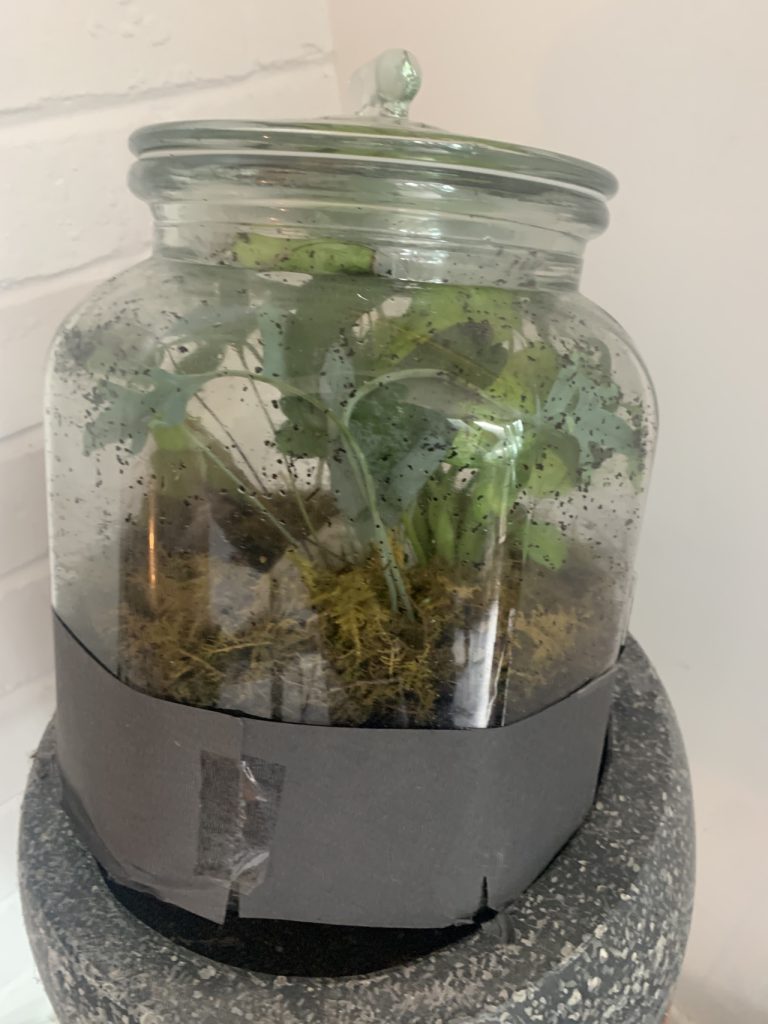
For my container I got a sealed one with a relatively large size, around two of my hand lengths.
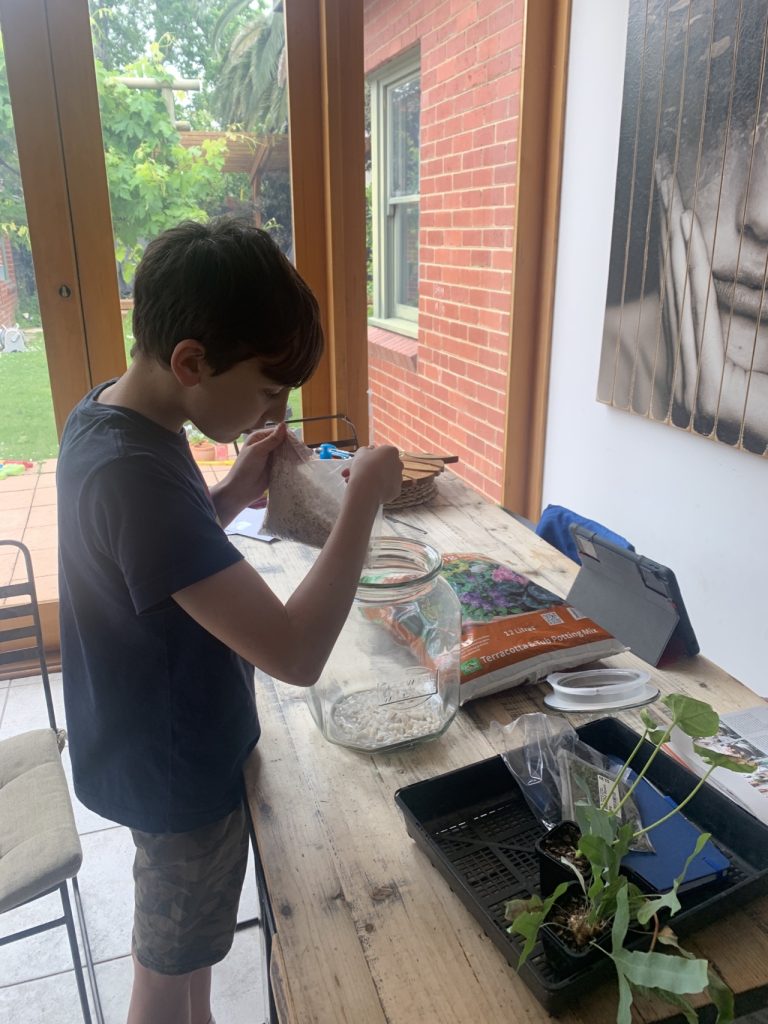
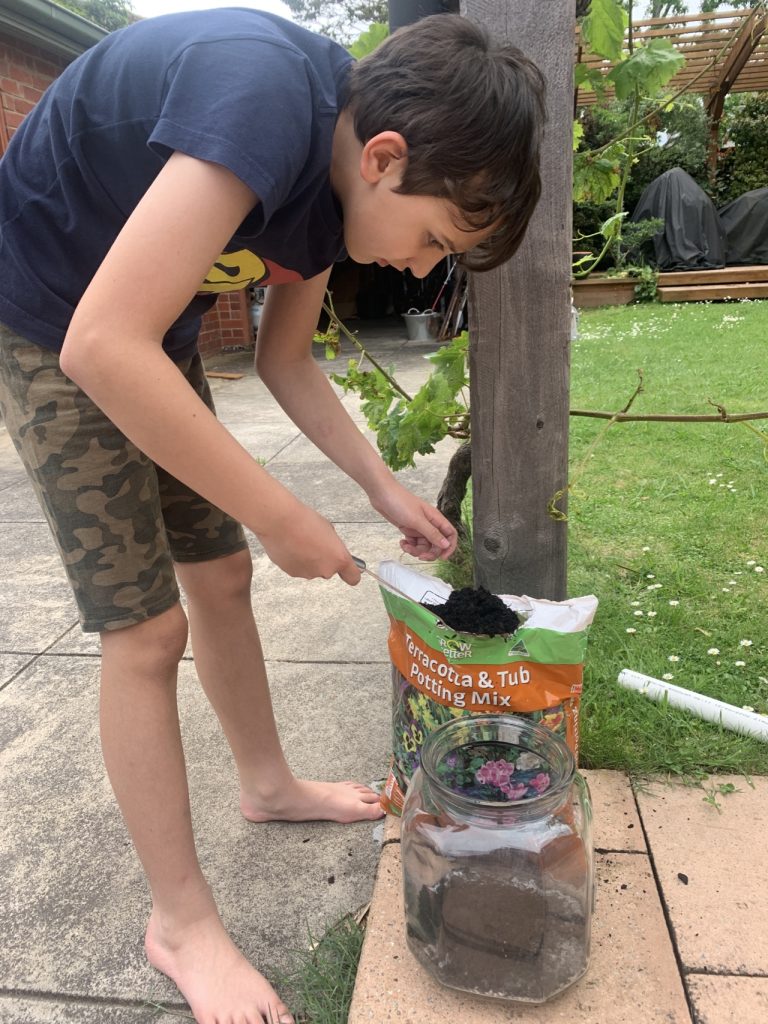
I made it by first adding some gravel to the bottom then some activated charcoal powder then we put in the potting mix after that we added three plants and put some moss on top of the dirt and some worms. We also had to put black paper around the dirt line so that the worms would not get scared.
Finally we gave it a few shots of water with the spray and then waited a few days to tell if it was too much or not enough.
13 Nov 2022: Adding activated charcoal to gravel13 Nov: Adding potting mix on top of charcoal
It turned out that it was WAY too much water so we wiped the water droplets off the lid and tried again but we repeated the process once again and finally got it about right.
At the start we had too much moisture in the terrarium
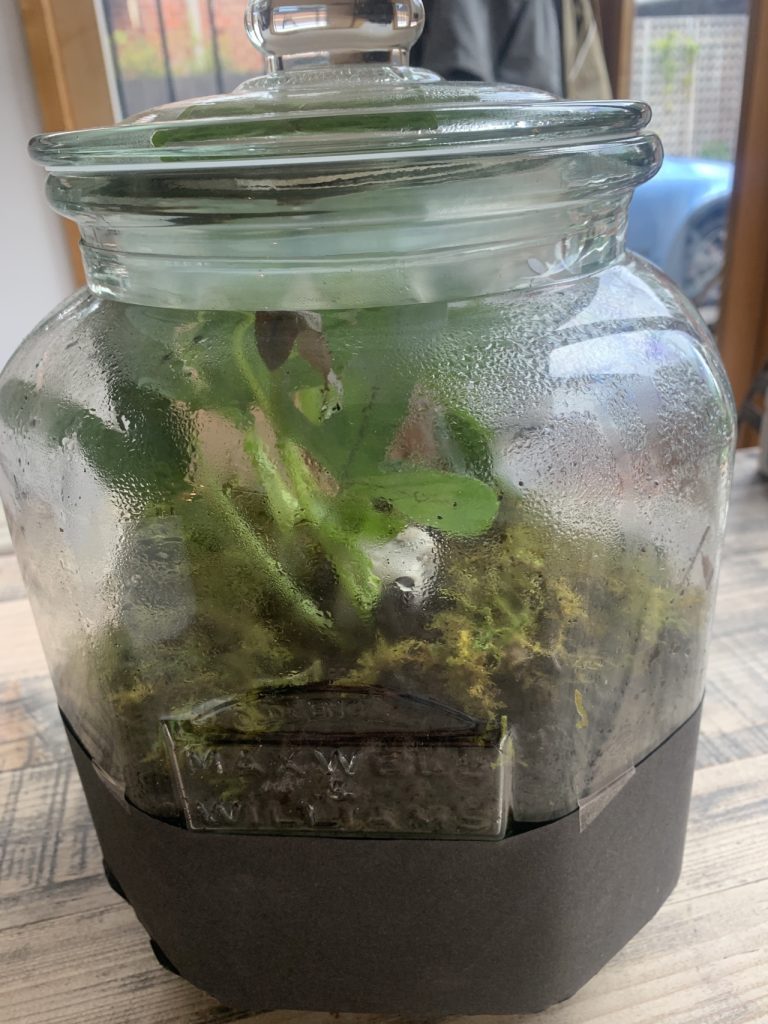
On 23rd Nov we sealed it and left it alone so it would be like an eco system on its own. In December we went on holiday to New Zealand for a month and nobody looked after it. After touchdown, at Melbourne Airport it looked like this(below).
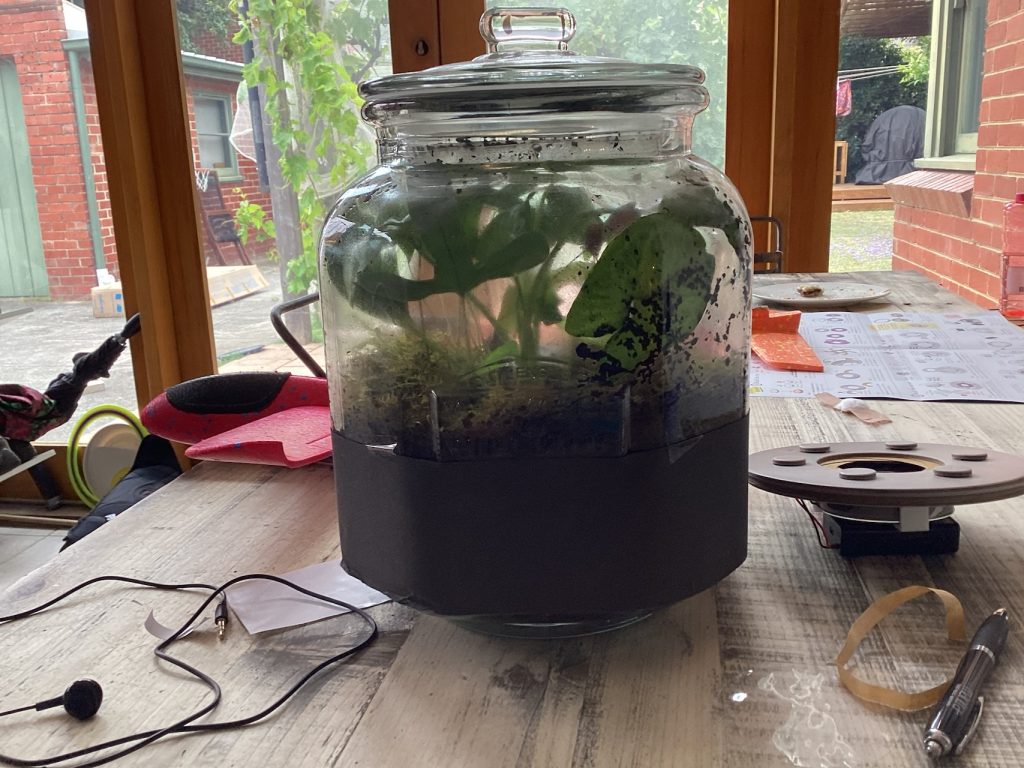
Terrarium update: 13 Jan 2023Terrarium at April 2023, after being sealed for 4 months.
After 4 months the life forms inside are still growing. While we only placed plants in there it appears that unseen bugs are moving the dirt up the sides.
Big-city living could be a recipe for happiness(Image: Nomadic Luxury/Getty)
The way we live is mostly down to accidents of history. So what if we thought it through properly?
IN JUST a few thousand years, we humans have created a remarkable civilisation: cities, transport networks, governments, vast economies full of specialised labour and a host of cultural trappings. It all just about works, but it’s hardly a model of rational design – instead, people in each generation have done the best they could with what they inherited from their predecessors. As a result, we’ve ended up trapped in what, in retrospect, look like mistakes. What sensible engineer, for example, would build a sprawling, low-density megalopolis like Los Angeles on purpose?
Suppose we could try again. Imagine that Civilisation 1.0 evaporated tomorrow, leaving us with unlimited manpower, a willing populace and – most important – all the knowledge we’ve accumulated about what works, what doesn’t, and how we might avoid the errors we got locked into last time. If you had the chance to build Civilisation 2.0 from scratch, what would you do differently?
Redesigning civilisation is a tall order, and a complete blueprint would require many volumes, not just a few magazine pages – even if everybody agreed on everything. But, undaunted,New Scientistset out to discover what might be on the table, by seeking provocative ideas that challenge what we take for granted. The result is a recipe for overhauling how we live, get around, and organise our societies – as well as reconsidering our approach to concepts such as religion, democracy and even time. Dreaming of a new civilisation is more than a thought experiment: the answers highlight what ismost in need of a rethink, and hint at bold repairs that might be possible today. Take cities, for starters. Historically, they have generally arisen near resources that were important at the time – say harbours, farmland or minerals – and then grown higgledy-piggledy. Thus San Francisco developed on a superb harbour and got a boost from a mid-19th century gold rush, while Paris grew from an easily defended island on a major river. How would we design cities without the constraints of historical development? In many ways, the bigger cities are, the better. City dwellers have, on average, a smaller environmental footprint than those who live in smaller towns or rural areas (New Scientist, 18 November 2010, p 32). Indeed, when Geoffrey West of the Santa Fe Institute in New Mexico and his colleagues compared cities of different sizes, they found that doubling the size of a city leads to a 15 per cent decrease in the energy use per capita, the amount of roadway per capita, and other measures of resource use. For each doubling in size, city dwellers also benefit from a rise of around 15 per cent in income, wealth, the number of colleges, and other measures of socioeconomic well-being. Put simply, bigger cities do more with less. Of course, there are limits to a city’s size. For one thing, West notes, his study leaves out a crucial part of the equation: happiness. As cities grow, the increasing buzz that leads to greater productivity also quickens the pace of life. Crime, disease, even the average walking speed, also increase by 15 per cent per doubling of city size. “That’s not good, I suspect, for the individual,” he says. “Keeping up on that treadmill, going faster and faster, may not reflect a better quality of life.” But there’s an even more fundamental limit to how big a city can get: no matter how efficiently its inhabitants use resources, a city must have a way to get enough food, materials and fresh water to support its population. “Water is the most problematic of diminishing resources,” says Christopher Flavin, president of the Worldwatch Institute in Washington DC. “Oil can be replaced with renewable sources of energy. There are no good replacements for fresh water.” No matter what the benefits of aggregation, then, our new civilisation is likely to need many cities of diverse sizes, each matched to the ability of the local environment to supply its needs. That means no megacities in the middle of the desert, like Phoenix, Arizona. Our larger cities should be close to good water sources, preferably along coasts to give access to energy-efficient shipping, and near fertile farmland. New York, Shanghai and Copenhagen all fit that bill; Los Angeles, Delhi and Beijing fall short. Perhaps the biggest flaw of many cities is the suburb – the land-gobbling sprawl that creates communities far from shopping or commercial districts and forces people into their cars to travel. “Urban sprawl has been a huge mistake,” says Flavin. It’s been the dominant growth pattern of most North American cities, and is a major reason why Americans use so much more energy than Europeans, whose cities tend to mix residential and commercial uses in more walkable neighbourhoods. Big cities like London and New York have already solved the car problem by making driving so impractical that most residents use mass transit, or walk or cycle. But even smaller cities could achieve this with the right design.
City living
Mark Delucchi at the Institute of Transportation Studies at the University of California, Davis, envisions districts laid out concentrically around a central business hub which residents access on foot, by bicycle or with light vehicles like golf carts (see diagram). “We believe that one of the major things that keeps people out of these low-speed vehicles is that people don’t feel they function safely enough in a regular road system,” he says. To avoid that, conventional cars and trucks would be segregated on separate roadways, perhaps at the outskirts of each district. To make this layout practical, every resident would need to live within about 3 kilometres of a hub, Delucchi estimates, giving each district a population of about 50,000 to 100,000, while maintaining a pleasant living environment of low-rise buildings. Each hub could then link to other hubs through a mass transit system, allowing people easy access to other districts for work, and to the attractions of a larger city. A few cities, such as Milton Keynes in the UK and Masdar City in Abu Dhabi, already use some of these principles. Once this basic structure was established on the large scale, much of the responsibility for design within each district could then be handed over to residents and local businesses. In a way, that’s how cities used to evolve. For example, mills were set up by the river to take advantage of water power, then workers’ houses were built within walking distance, while the mill owners built on the hills where the view was best. But over the past couple of centuries, this organic evolution has been replaced by top-down planning, leading to the sterile monotony of cities such as Brasilia, Brazil, and modern tract-housing suburbs. Today, though, online social networking gives individual users tools to coordinate and cooperate like never before. “I would build the cities in an open-source way, where everybody can actually participate to decide how it’s used and how it changes,” says Carlo Ratti, an urban designer at the Massachusetts Institute of Technology. “It’s a similar process to what happens in Wikipedia.” By tapping into this sort of crowd-sourcing, the residents themselves could help plan their own wiki-neighbourhood, Ratti proposes. An entrepreneur seeking to start a sandwich shop, for example, could consult residents to find out where it is most needed. Likewise, developers and residents could collaborate in deciding the size, placement and amenities for a new housing block – even, perhaps, the placement of roads and walking paths. With cities and transportation refashioned, the next problem our rebuilding society faces is energy. This one’s easy: virtually everyone agrees the answer should be renewables. “We can’t say it should all be solar or it should all be wind. It’s really critical that we have all of them,” says Lena Hansen, an electric system analyst with the Rocky Mountain Institute, an energy-efficiency think tank in Boulder, Colorado. That would help ensure a dependable supply. And instead of massive power plants, the best route would be small dispersed systems like rooftop solar panels. This decentralised generation system would be less vulnerable to extreme events like storms or attacks. Hansen estimates that building an electricity system fully based on renewables, at least with our present technology, might cost a bit more upfront than recreating the present, fossil-fuel-based system, but fuel savings would quickly recoup that. Still, it might not be such a bad thing if energy was more expensive in our new civilisation, says Joseph Tainter, a sustainability scientist at Utah State University in Logan. Since energy is a cost in most manufacturing, cheap energy makes other material goods cheaper, too. “It induces us to consume more and more – to produce more children, to consume other kinds of resources and let the society become more complex,” he says. To keep that from happening, Tainter suggests that energy prices might be kept artificially high. An alternative might be to ensure prices for all goods reflect their true environmental costs. If the price of fossil fuels reflected the actual cost of global warming, for example, simple economics would push everyone toward radical improvements in energy efficiency and alternative energy sources. While we’re tinkering with the economy, we might want to move away from using GDP as a measure of success. When nations began focusing on GDP after the second world war, it made sense to gauge an economy by its production of goods and services. “At that time, what most people needed was stuff. They needed more food, better building structures – stuff that was lacking – to make them happy,” says Ida Kubiszewskiof the Institute for Sustainable Solutions at Portland State University in Oregon. “Now times have changed. That’s no longer the limiting factor to happiness.” Instead, we may want to broaden our indicator to include environmental quality, leisure time, and human happiness – a trend a few governments are already considering. With Gross Domestic Happiness as our guide, people might be more likely to use gains in productivity to reduce their work hours rather than increase their salaries. That may sound utopian, but at least some societies routinely put greater value on happiness than on material things – such as the kingdom of Bhutan and the indigenous potlatch cultures of the west coast of North America that redistribute their property. “I don’t think it’s contrary to human nature to have a system like this,” says Robert Costanza, an ecological economist also at Portland State. After the economy, the next issue that needs to be dealt with in the new civilisation is the matter of government. We’ll assume that some form of democracy is best, though there might be some discussion about the details (see “Ultimate democracy“). But the bigger question is, how many separate states would we want? Here, not surprisingly, opinions differ widely. On one hand, humans evolved in small bands, and we still respond to challenges best in relatively small groups such as units of about 150, notes Robin Dunbar, an anthropologist at the University of Oxford. Governmental units no larger than, say, a Swiss cantonwould maintain this sense of commitment and local control in a way that is lost in larger units, he says.
New world view
On the other hand, increases in mobility, communication and technology – as well as the sheer size of the human population – mean that many of the world’s problems are now truly global. “What if there were a newspaper that was published just once a decade? What is the macroheadline of our time?” asks Paul Raskin, president of the Tellus Institute, a think tank in Boston. “This decadal New York Times would be tracking a really major story, and it would have a headline something like ‘History has entered the planetary phase’.” Just as events drove medieval city states to amalgamate into nations centuries ago, global problems are now pressing for global solutions, he says. And that requires some form of global governance, at least to set broad goals – biodiversity standards, say, or global emissions caps – toward which local governments can find their own solutions. All our design efforts to this point have been aimed at creating a sustainable, equitable and workable new civilisation. But if we want our new society to last through the ages, many sustainability researchers stress one more point: be careful not to make it too efficient. The history of civilisations such as the Roman Empire or the Mayans suggests that they expanded dramatically during periods of climatic stability. Rulers knew how much they could get away with – how many fields they could irrigate from a single canal, for example, or how much forest to leave for the next generation of builders. That worked, and the civilisation flourished, until climate shifted. “They ended up building themselves to a point that might have been very efficient, but when the environment started working differently, they had overbuilt,” says Scott Heckbert, an environmental economist at CSIRO in Darwin, Australia, who simulates the collapse of past empires and peoples. In the end, though, no human civilisation can last forever. Every society encounters problems and solves them in whatever way seems most expedient, and every time it does so, it ratchets up its complexity – and its vulnerability. “You can never fully anticipate the consequences of what you do,” notes Tainter. Every civilisation sows the seeds of its own eventual doom – and no matter how carefully we plan our new built-from-scratch civilisation, the most we can hope for is to delay the inevitable.