Chocolate Orange Cheesecake

This is a fantastic unbaked cheesecake.
To be honest, it’s a bit boring to make because it’s so easy, but on the plus side … it’s so easy!

Ingredients

Base

  • 250g Digestive biscuits (finely crushed)
  • 100g (6tbsp) butter (melted)
  • 3tsp cocoa powder

Cheesecake layer

  • 750g full-fat cream cheese
  • 250g low fat cream cheese
  • 200g icing sugar
  • 1 orange
  • 200g dark chocolate (melted)
  • 2tbsp brandy

Method

Simple instructions

  1. For the base, mix all the base bits together in a bowl, then put them in the cake tin.
  2. Repeat for the cheese-cake layer.
  3. Put it in the fridge for four hours.

Detailed instructions

Base

  1. Finely crush the digestive biscuits. A good way of doing this is in a blender. If you have a slicing tool then that can be a good starting point to get all the biscuits into quite small pieces. Then use a mixing blade to get them much finer.
  2. Melt the butter in the microwave in a microwave-safe bowl. Remember to cover the bowl to avoid splatters. It will take about 30-45 seconds.
  3. Mix with the crushed biscuits in a large bowl.
  4. Add the cocoa
  5. When it is all mixed, pour the breadcrumb base into a ~22cm cake tin. Use a rubber spatula or a large spoon to push the crumbs down firmly to make a smooth flat base. It should no longer look like crumbs but like a single flat chocolatey disk. Use the spatula to clean out the bowl thoroughly.

Filling

  1. Using the same bowl that you just used for the base, which should no longer have more than one or two crumbs in it, but may have buttery cocoa around the sides …
  2. Add all four tubs of cream cheese. Notice that we’re using 3 full-fat and one low fat. Using only low-fat makes the cake too runny, and if you use 4 full-fat it is a bit too solid. 75% full-fat seems to be the right mix, but you could also try 50/50.
  3. Add the icing sugar
  4. Melt the chocolate. Melting this in the microwave doesn’t really work that well – Google it if you’re interested in why. A better method is to break the choc into small pieces (single lumps) into a small bowl that fits inside a saucepan. Add some water to the saucepan, then put your small choc bowl in. i.e. the small bowl of choc is having a bath in the saucepan of water. Now you can melt the choc on the stove.
  5. Add the chocolate to the cheese and icing sugar.
  6. Clean the skin of your orange to remove any nasty chemicals, then use a zesting grater to take the outer 1mm of skin from your orange. Add that zest to your bowl. Taste a tiny bit – it’s super orange-y, but not sweet. Kind of odd!
  7. We need the juice of half your orange. Only use half the orange for juice because too much juice will make it difficult for the cake to set.
  8. [optional] Add two caps of brandy
  9. Mix it all together using an electric whisk. If you haven’t got one you can use a spoon, but you’ll need strong arms!
  10. Use your rubber spatula to pour all of the filling into the cake tin. It will likely just be a big pile in the middle and won’t be smooth. You can settle it down by jiggling the cake tin.
  11. Cover it in cling film then put it in the fridge for 2 hours.
Extreme Chocolate Cakery

The trick with chocolate cake, and our excuse for making more of them, is experimenting with how much of the flour can be replaced with cocoa without the cake losing structural integrity.
In principle, the cake is just a version of a standard Victoria Sponge cake (equal weight of egg, butter, sugar, and self-raising flour). Now, your average chocolate cake maker will foolishly suggest adding a tablespoon or two of cocoa powder. We have found that replacing more than half of the flour with cocoa and you’ll start to have problems (think about it – flour mixed with water has a very different consistency from cocoa mixed with water), but you can just about get away with that – certainly a third of the flour can be replaced with cocoa although you might need to add a bit more baking powder to replace the self-raising flour.

Victoria Sponge Cake

Ingredients

  • 4 eggs
  • 200g margarine
  • 200g sugar
  • 200g flour

Method

  1. Blend the margarine and sugar together, then beat in the eggs.
  2. Finally fold in the flour.
  3. Bake for 20 minutes at 180 C.

Extreme Chocolate Caking

Additional ingredients

  • 70g cocoa
  • 2 tsp baking powder (to replace the 70g flour
  • banana
  • jam
  • walnuts – chopped
  • Anything else that takes your fancy – a splash of kahlua?
  • MORE CHOCOLATE! You’ll need about 375g more maximum-cocoa (e.g. cooking) chocolate

Method

  1. Once you’ve got your basic cake mix (i.e mixed your flour/cocoa, eggs, butter, sugar) break up about 125g of chocolate into smallish lumps (half single squares) and mix that, walnuts, kahlua, etc into the mix.
  2. Bake in two dishes for 20 minutes or so. Note: because of the additional chocolate, it won’t firm-up in the same way as your average cake.
  3. After cooking, let it rest for a while on a couple of wire racks. When it has cooled a bit, put one of the cake halves on a large plate and generously spread it with jam, and cover in slices of banana.
  4. Melt the remaining 250-ish grams of chocolate in a saucepan with a tablespoon or two of water (better still: brandy!) on a very low heat. This should give you a fantastic replacement for boring conventional chocolate icing.
  5. Spread a layer of your melted chocolate over the banana/jam then plant your second cake-half on the first. cover the whole thing melted chocolate.
  6. Welcome to the world of extreme chocolate-cakery!

Thai Pumpkin Soup

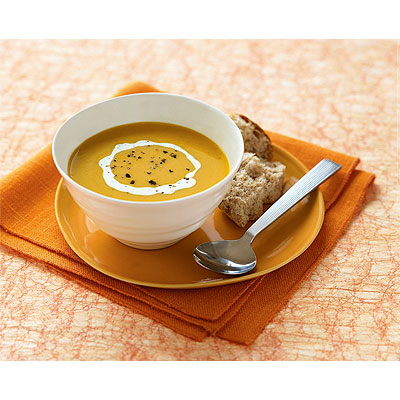
This is an absolutely fantastic pumpkin soup found at Waitrose

Serves 4 genously

Ingredients

  • 1kg pumpkin or butternut squash, peeled, deseeded and cut into 1cm cubes
  • 1 tbsp vegetable oil
  • 1 onion, chopped
  • 2.5cm piece fresh root ginger, peeled and finely chopped
  • 4 tsp Bart Red Thai Curry Paste
  • 450ml vegetable stock
  • 400ml can Bart Spices Coconut Milk
  • 142ml pot single cream
  • 20g pack fresh basil, chopped

Method

  1. Preheat the oven to 180 C
  2. Place the pumpkin or butternut squash on a non-stick baking tray and season. Roast for 30 minutes, or until tender.
  3. Meanwhile, heat the oil in a medium pan and add the onion and ginger.
  4. Cover and saute; for 10 minutes, stirring occasionally.
  5. Stir in the curry paste and cook for 1-2 minutes, then add the pumpkin, stock and coconut milk.
  6. Cover and bring to the boil, then allow to simmer for 5 minutes. Remove from heat and cool slightly.
  7. Puree the soup in a food processor or blender in 2 batches, until smooth. Return to the pan, season to taste and reheat gently, adding a little more stock or boiling water for a thinner consistency if required.

Serving

Place the cream and chopped basil in a small pan and heat gently. Serve the soup in bowls with the basil cream swirled over the top and sprinkled with freshly ground black pepper, and with crusty granary bread on the side.

Lemonade Scones

Ingredients

  • 3 1/2 cups of self-raising flour
  • 1 Cup of double cream
  • 1 cup of lemonade

Method

  1. Pre-heat oven to 200 degrees celcius
  2. Put all the ingredients in a large bowl
  3. Stir enough for ingredients to be thoroughly mixed but no more than you have to to make the dough
  4. Sprinkle flour (self-raising or plain) on the bench to make an area where you can roll the dough
  5. Spread dough on the floured surface, and roll out to about 2 or 3 cm thick
    Prepare the baking tray where you will cook the scones by putting baking paper on it so the scones don’t stick
  6. Cut into scone-size pieces and place on the baking tray (make sure there is enough space around each scone for it to grow
  7. Put the tray in the oven for about 20 or 25 minutes

Eating

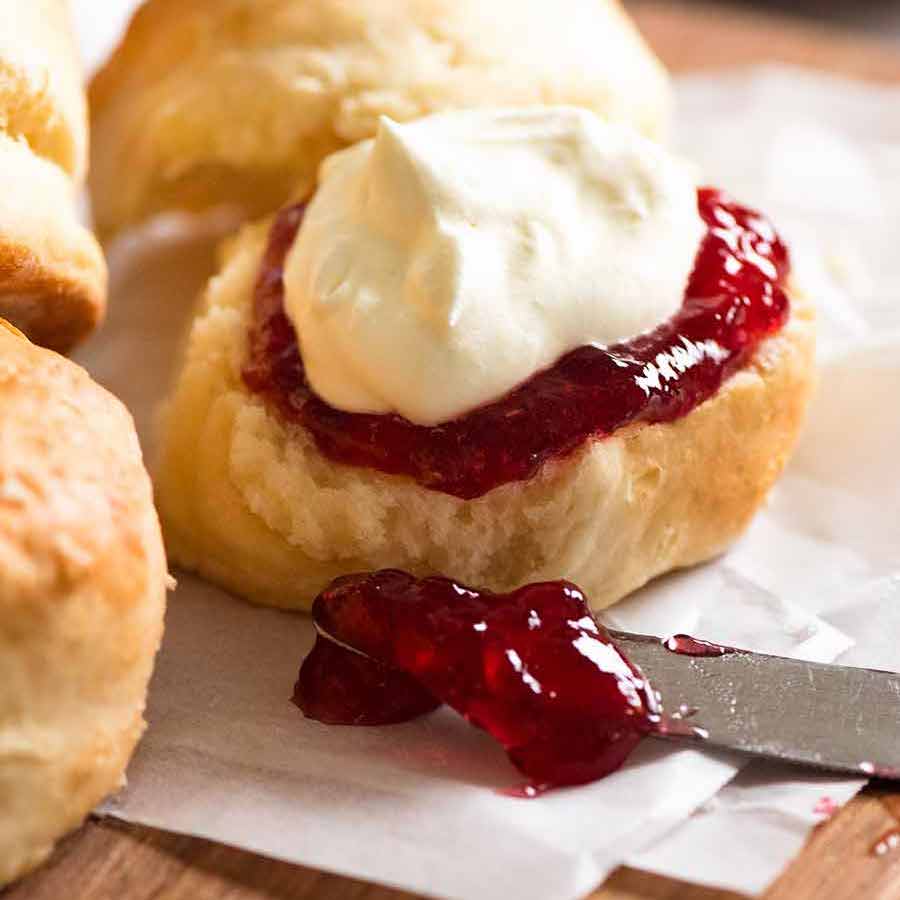
Fun fact: Traditionally scones are eaten with jam and cream. This works really well, but jam can be replaced with chocolate spread or honey. Banana also works well instead of, or as well as, cream.