How the Hermès Oran Was Born: The Birth of an Icon
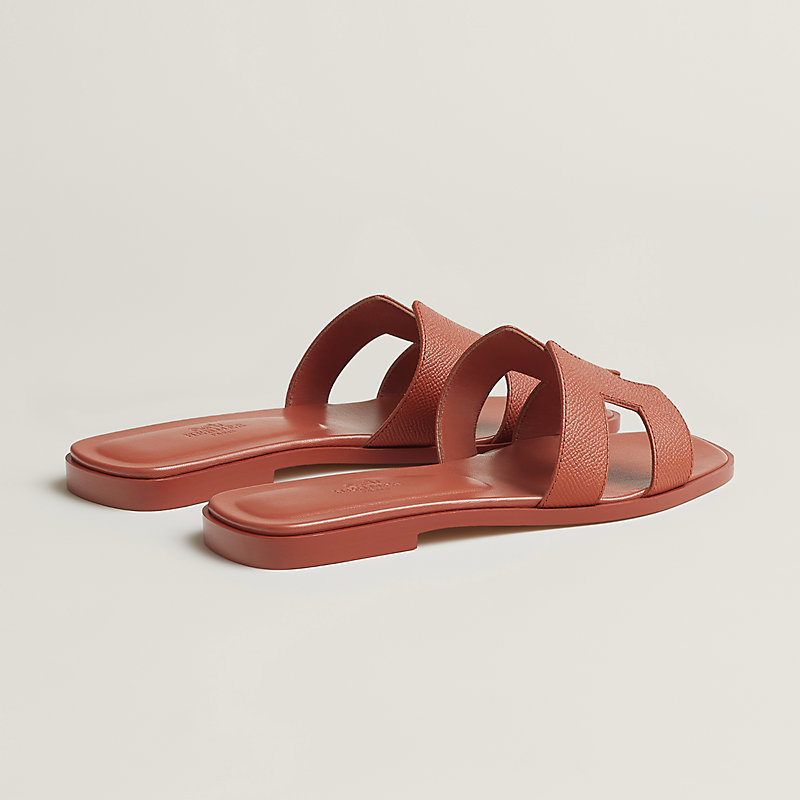
The Hermès Oran sandal was launched in 1997 by Hermès in-house designer Philippe Mouquet. The design was strikingly simple — a one piece of hide cut into the H shape, mounted on a flat footbed with a slender slingback strap. The H referenced the brand, but the cutout also served a functional purpose: it allowed air to circulate above the foot’s surface, making the sandal comfortable in warm weather. The sandal was named after the city of Oran in Algeria, a coastal Mediterranean city historically associated with leisure, sun, and the good life.
The context of the Oran’s launch is meaningful. 1997 was a period of fashion minimalism. The 1990s minimal fashion shift — including the work of Lang, Sander, and Klein — had primed consumers to appreciate restraint, clean lines, and quality materials over ornament. The Oran entered the market at an ideal point: it was a sandal that announced luxury not through embellishment or flash but through the genuine excellence of its material and craftsmanship.
Early Years: The Insider Years
In its initial years, the Hermès Oran occupied an interesting cultural position. It was cherished by a defined audience — women (and some men) who appreciated the highest quality leather goods and understood the value of understatement in a market dominated by visible branding. The Oran was worn by fashion professionals. Travel-minded, cosmopolitan women who moved between major fashion destinations used the sandal year-round.
During this period, the Oran was primarily offered in the core Hermès leathers — Epsom calfskin and Swift as mainstays — and in a range of neutral and classic colors. The sandal was www.oransandals.com/ available in boutiques but rarely required the level of planning that has marked recent years. You could, in most cases, go to a store and buy an Oran in your chosen shade and measurement without advance preparation. This accessibility, paradoxically, kept the sandal somewhat under the radar — its exclusivity was cultural and aesthetic rather than enforced by limited supply.
The Internet Years: Rising Cultural Profile
The emergence of fashion blogs in the middle of the decade began to broaden awareness of the Oran past its initial following. Early luxury fashion bloggers documented their Hermès purchases with detail and enthusiasm, and the Oran — beautiful on camera, distinct in design, and immediately recognizable — started featuring in style photography with increasing frequency. By the start of the 2010s, visual social platforms were amplifying this visibility further, and the Oran started its shift from insider piece to mainstream aspirational object.
The fashion industry’s growing interest for easy, quality dressing sped the Oran’s cultural elevation. As the decade progressed, the approach of understated luxury — premium fundamentals, restrained logos, quality items built for longevity — was gaining momentum. The Oran was almost perfectly positioned of this approach: high quality, restrained branding, and verifiably long-lasting.
2015–2020: Going Mainstream
By 2015, the Hermès Oran had achieved a level of cultural recognition that very few individual shoe styles ever reach. It was being referenced in mainstream fashion media, reproduced by affordable brands at fraction prices, and discussed in fashion communities online with the kind of depth and enthusiasm typically applied to seasonal runway shows. The knockoffs — clearly exemplified by H-cutout versions from high-street brands — simultaneously testified to the Oran’s cultural influence and emphasized the distance between the genuine and the fake.
The secondary market for the Oran also matured during this period. Major resale platforms and specialist Hermès sellers experienced rising supply and demand. Resale prices began to consistently track at or above retail for popular configurations, and the Oran’s status as an investment-grade accessory with real secondary market worth was now part of standard Oran discussion around the sandal.
Recent Years: The Quiet Luxury Peak
The years after the pandemic brought a dramatic intensification of interest in quiet luxury aesthetics. As a style correction pushing back against ostentation and logo display that had defined the preceding decade, a fresh demand for restrained, highest-quality clothing and accessories emerged. The Hermès Oran — low, restrained, constructed from premium calfskin — was ideally situated as the representative sandal of this aesthetic. According to Business of Fashion, the Hermès Oran is among the most recognized high-end sandal styles in the world. Its story is essentially a compressed narrative of how luxury fashion’s values have evolved over the last thirty years.
| Era | Key Characteristics | Cultural Status |
|---|---|---|
| 1997–2005 | Quiet launch, insider appeal | Cult object among luxury insiders |
| 2005–2015 | Blogging and Instagram discovery | Rising luxury fashion status symbol |
| 2015–2020 | Global recognition, copied widely | Iconic, investment narrative emerges |
| 2020–2026 | Quiet luxury movement peak | Defining shoe of investment dressing |
The Secret of the Oran’s Longevity: A Sandal for All Eras
The Hermès Oran’s longevity is not accidental. It is rooted in a design principle that is unusually uncommon in footwear: the shoe was conceived from the beginning with such clarity of purpose and execution that it required no revision. The the dimensions, the material, the cutout, the profile, and the strap — every element was properly designed at launch and have remained right through every season. In a fashion environment driven by seasonal shift, that steadfastness is itself a statement. The Oran endures because it was designed perfectly the first time and because Hermès has had the discipline to leave it alone.